
Easy Lemon Meringue Pie with the Perfect Fluffy Meringue topping
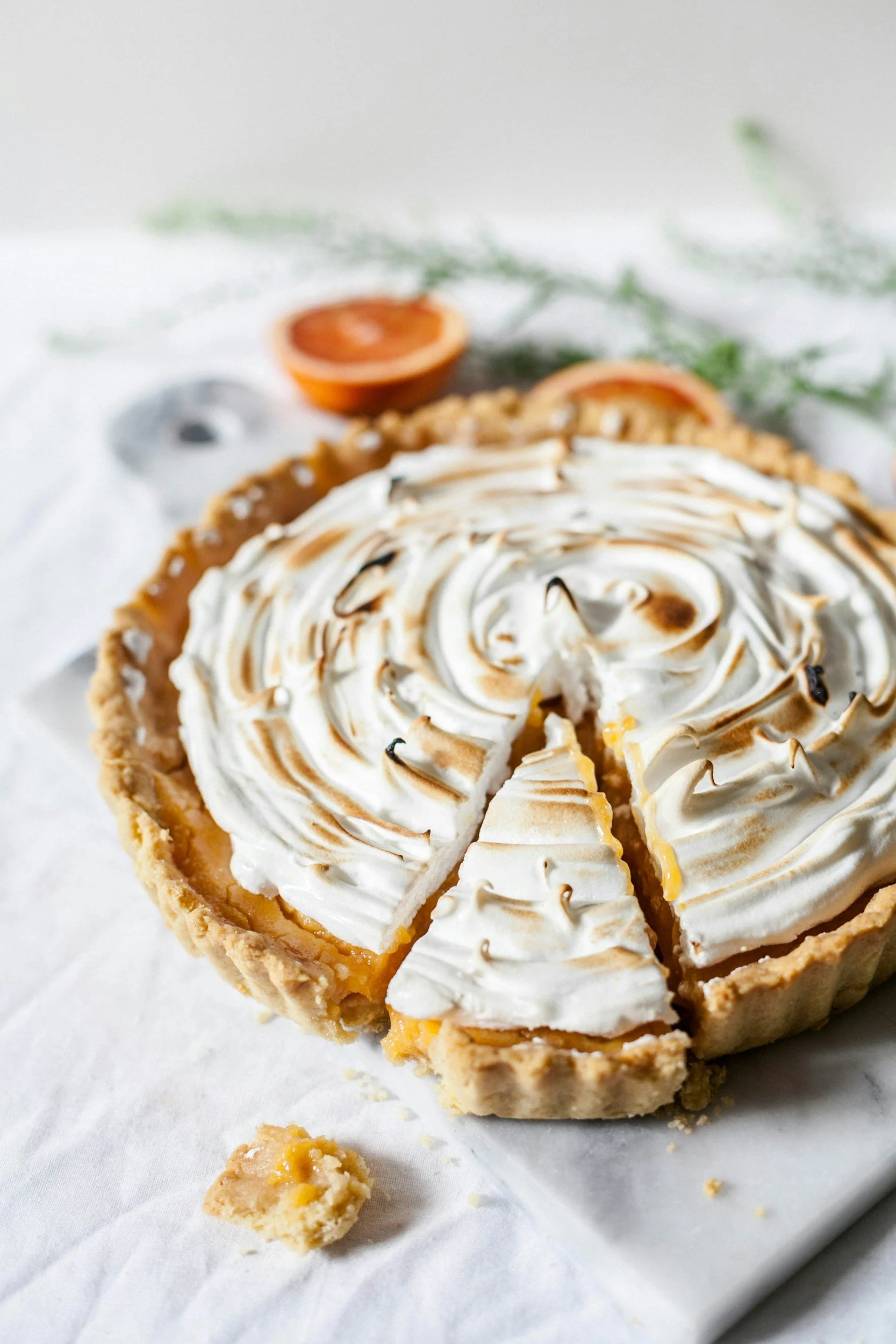
This easy lemon meringue pie recipe features a bright, tangy lemon filling topped with soft, fluffy meringue. A foolproof method for a pie that slices beautifully and never weeps.
As an Amazon Associate I earn from qualifying purchases.

If you’ve ever searched “how to make lemon meringue pie from scratch” or “easy lemon meringue pie with fluffy topping,” this is the recipe you want to save.
This version breaks the process into three simple steps: crust, lemon curd, and meringue, making it approachable even if you’ve never made meringue before.
The result? A bright, tangy lemon filling paired with a soft, glossy meringue that bakes up beautifully golden on top.
🍋 Why This Lemon Meringue Pie Works
This recipe focuses on:
A rich lemon curd cooked slowly for perfect thickness
A stable meringue with cream of tartar
A simple method that avoids overcomplication
It’s ideal if you’re looking for:
an easy lemon meringue pie recipe
a homemade lemon pie with fresh lemon juice
a foolproof meringue that holds its shape
Equipment needed
Standmixer or a handmixer (affiliate link) with whisk attachment
spatula (affiliate link)
citrus juicer (affiliate link)
Ingredients
Pie crust
1 pre-baked 9-inch pie crust (homemade or store-bought)
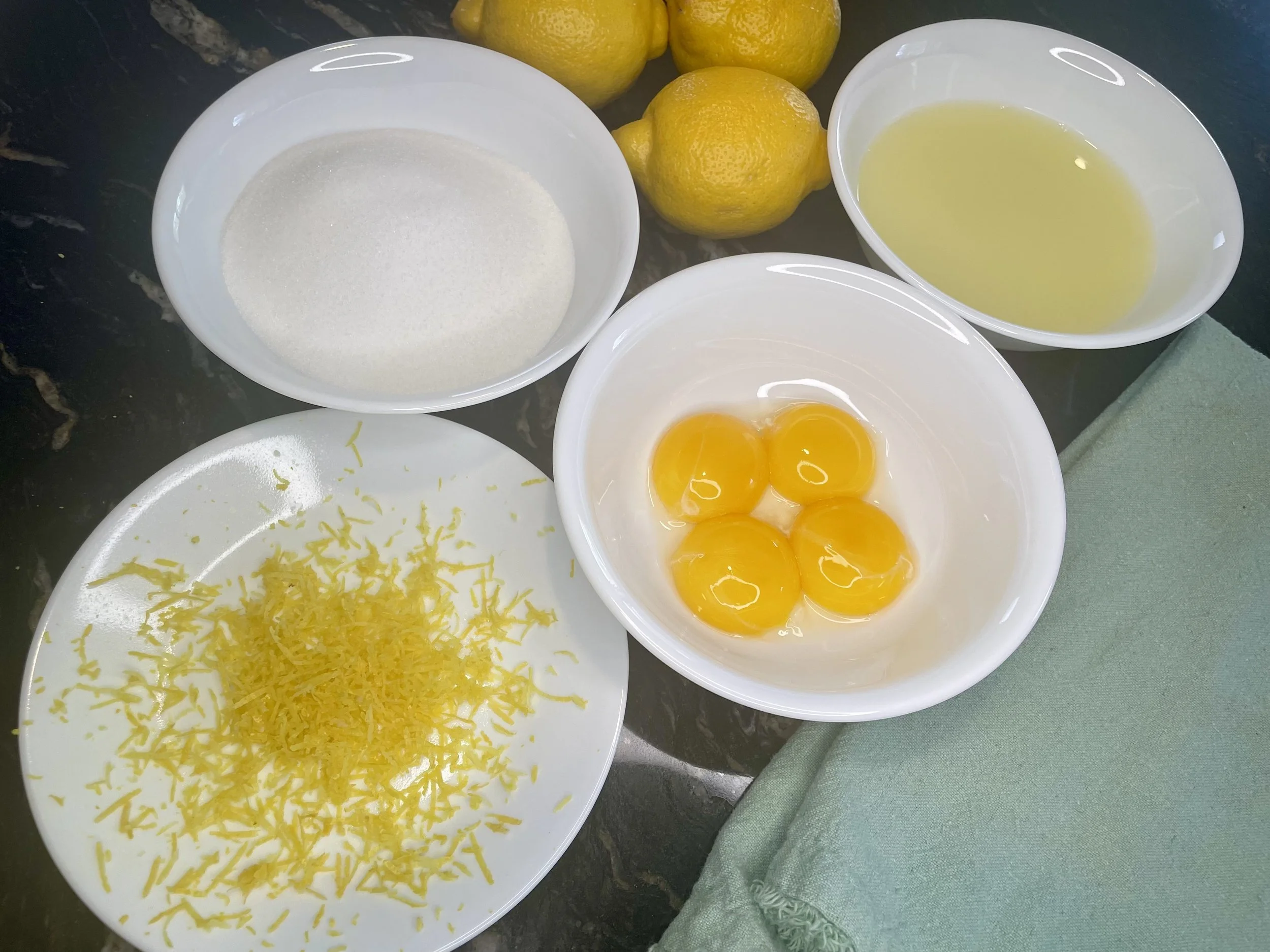
Lemon curd filling
4 egg yolks
1 cup sugar
Zest of 1 lemon
2/3 cup lemon juice (fresh or bottled)
1/2 cup cold unsalted butter
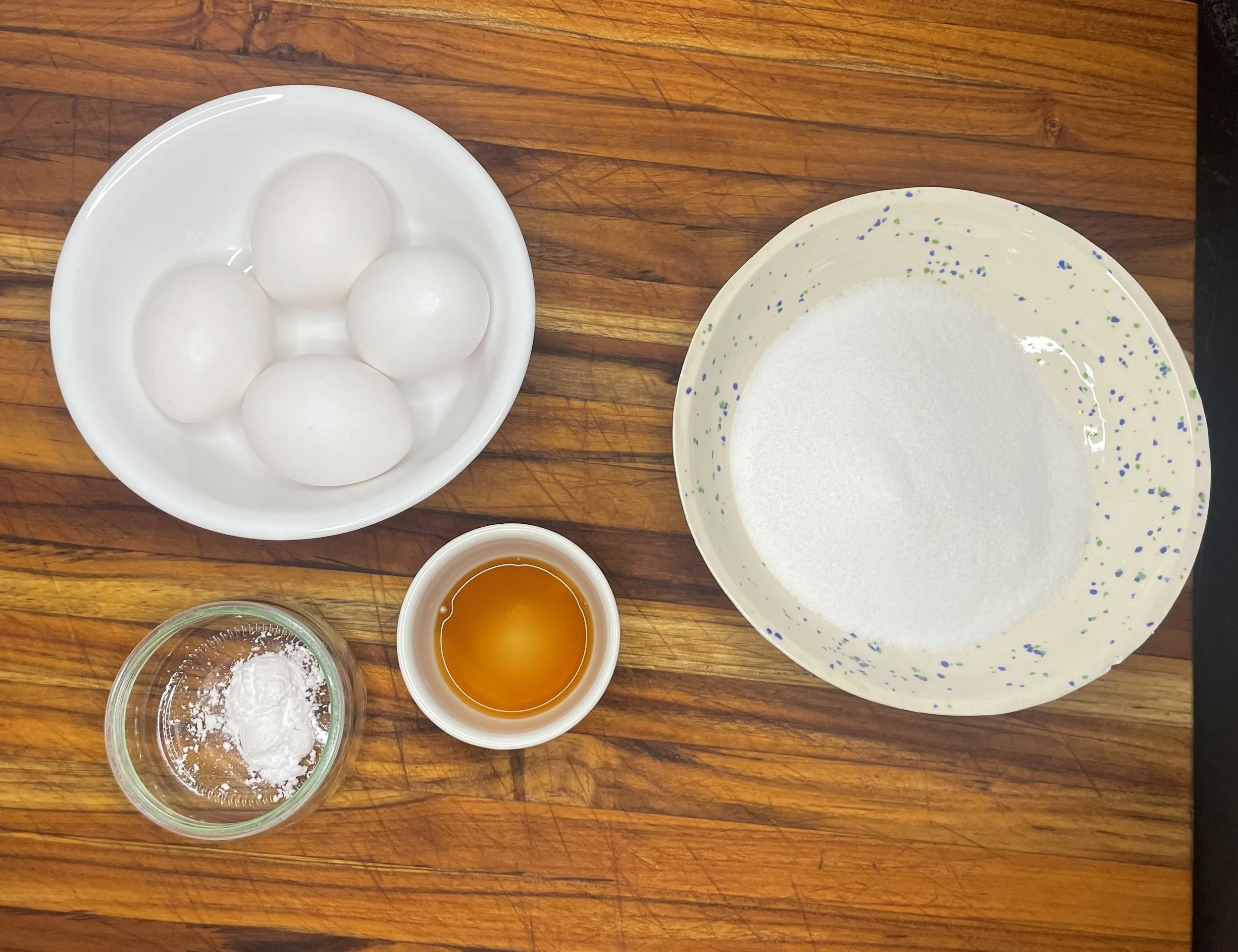
4 egg whites
1 cup sugar
1/2 tsp vanilla extract
1/2 tsp cream of tartar
Step-by-Step Instructions
1. Pre-bake the pie crust
Prepare and fully bake a 9-inch pie crust. Set aside.
2. Make the lemon curd
In a saucepan, combine egg yolks, sugar, lemon zest, and lemon juice.
Cook over medium heat for about 15–20 minutes, stirring regularly, until thickened.
Remove from heat and stir in cold butter until smooth.
Pour the lemon curd into the prepared crust and set aside.
3. Make the meringue
In a stand mixer or with a hand mixer, combine egg whites, sugar, vanilla, and cream of tartar.
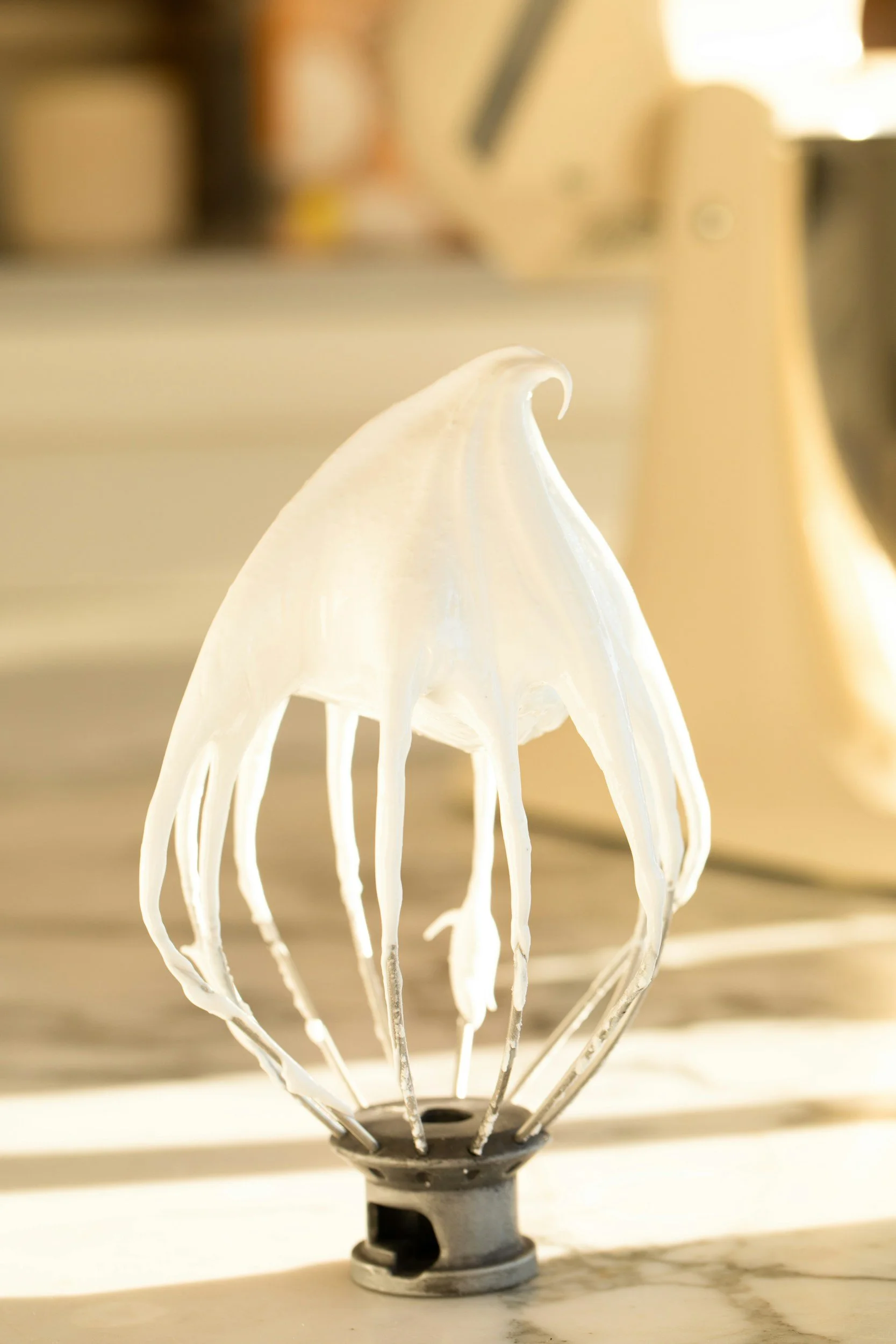
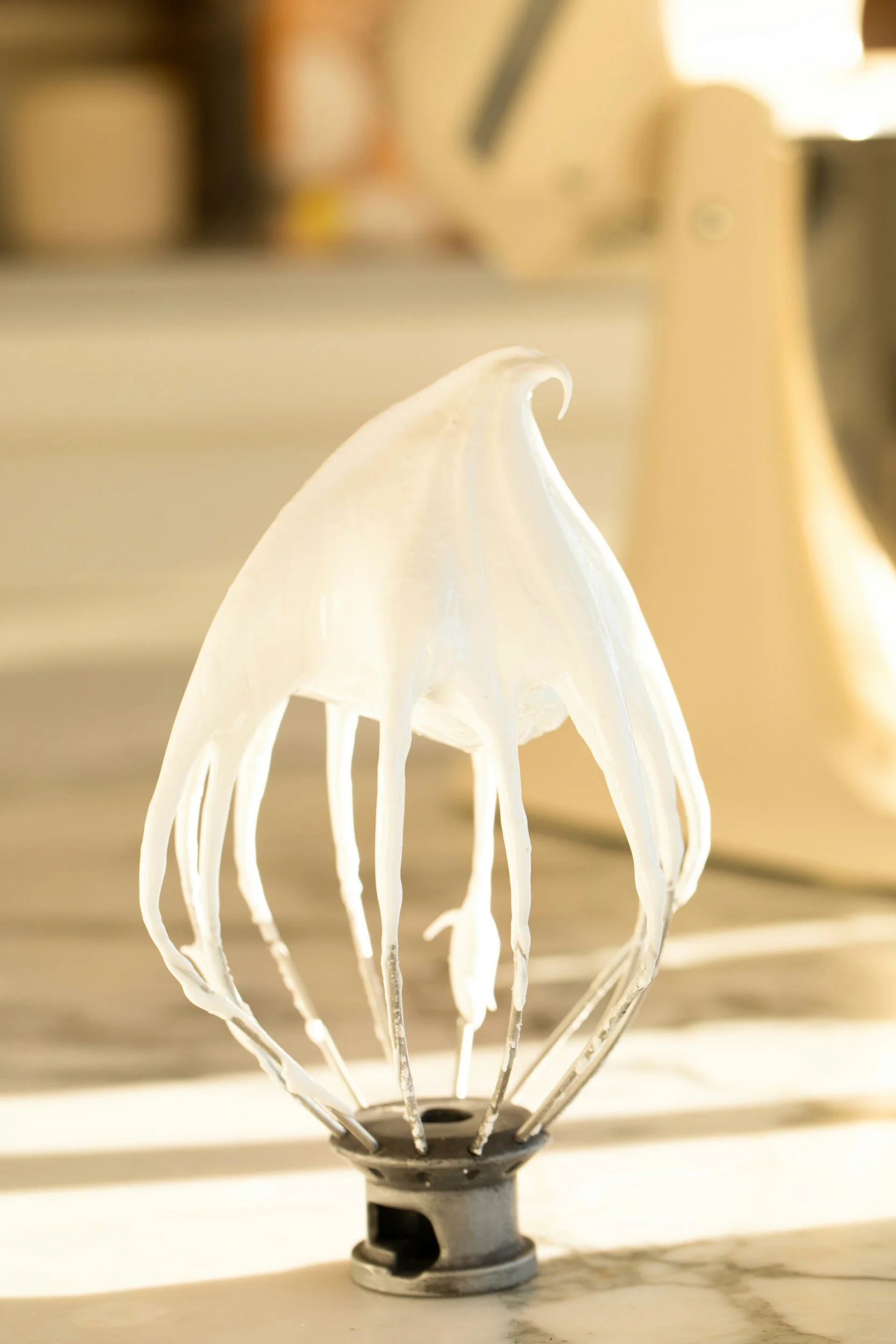
Whisk on high speed for about 6–8 minutes until the meringue is thick, glossy, and holds stiff peaks.
4. Assemble and bake
Spread the meringue over the lemon filling, making sure to seal it to the edges of the crust.
Bake at 350°F (175°C) until the peaks are lightly golden.
Let the pie cool at room temperature. Refrigerate before slicing.

Storage
Once fully cooked, let the Lemon Meringue Pie cool at room temperature, then cover and refrigerate.
It’s best eaten in the first 24 hours, but can be refrigerated for up to 3 days.
Do not freeze this pie.
Frequently Asked Questions
1. How do I make lemon meringue pie from scratch?
Make a baked pie crust, cook a lemon curd filling on the stove, then top with whipped meringue and bake until golden.
2. Why is my lemon curd not thickening?
It likely needs more time on the heat. Keep cooking and stirring until it visibly thickens.
3. Can I use bottled lemon juice for lemon meringue pie?
Yes, bottled lemon juice works, but fresh lemon juice gives a brighter flavor.
4. How do I know when meringue is ready?
It should be thick, glossy, and form stiff peaks that hold their shape.
5. Why do I need cream of tartar in meringue?
Cream of tartar helps stabilize the egg whites and improves structure.
6. Should lemon meringue pie be refrigerated?
Yes, once cooled, store it in the refrigerator.
7. How long should I bake meringue?
Bake just until the peaks turn golden brown—usually a few minutes.
8. Can I make lemon meringue pie ahead of time?
Yes, but it’s best eaten within 24 hours for best texture.
9. I dont own a stand mixer, Can i use a hand mixer?
Yes. Use a hand mixer with the whisk attachement. It might take a few extra minutes to whip up the meringue, but it it should work.
we think you’ll like these recipes:
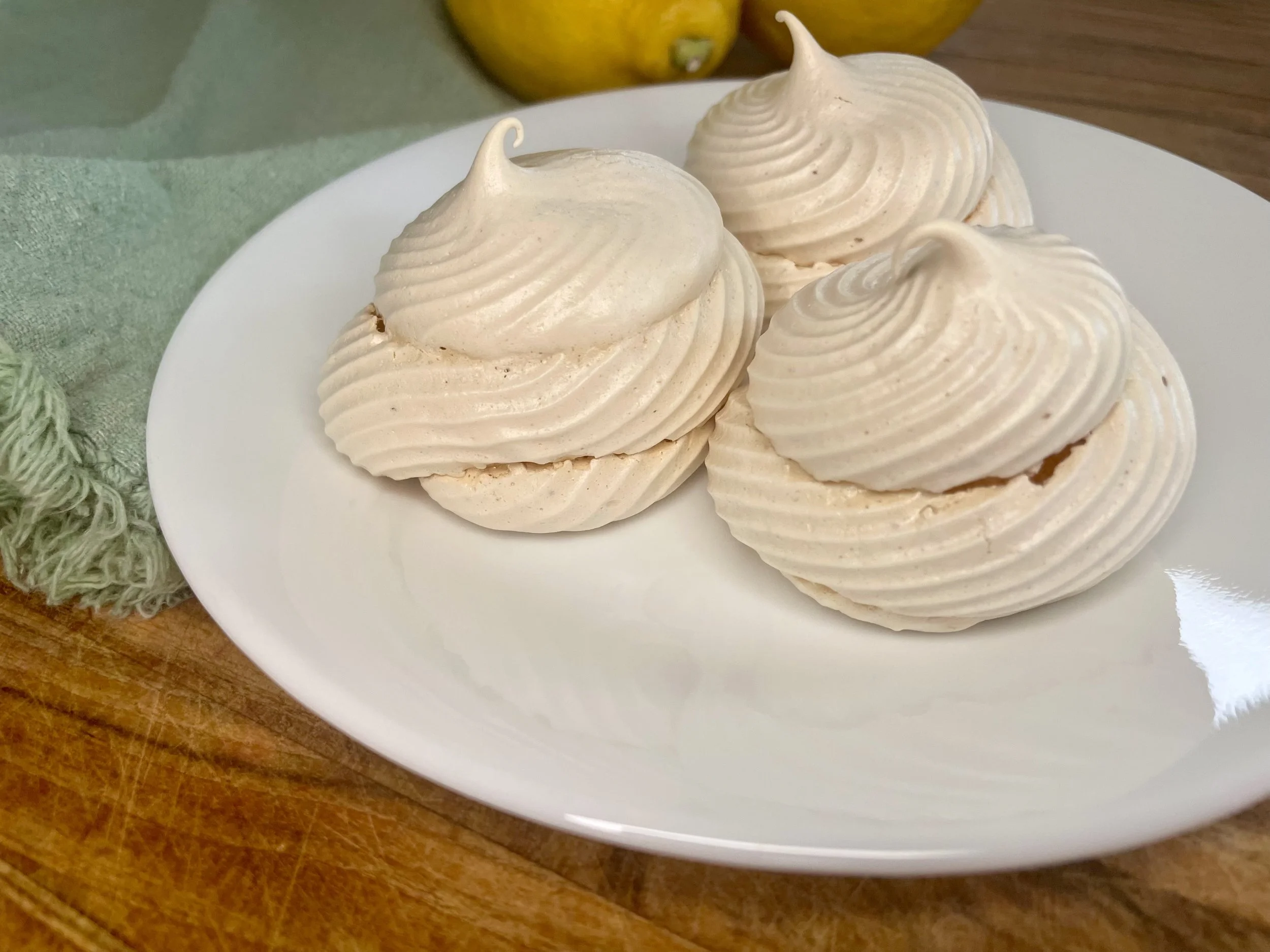
Incredibly Simple - café quality - Meringues: made right in your kitchen
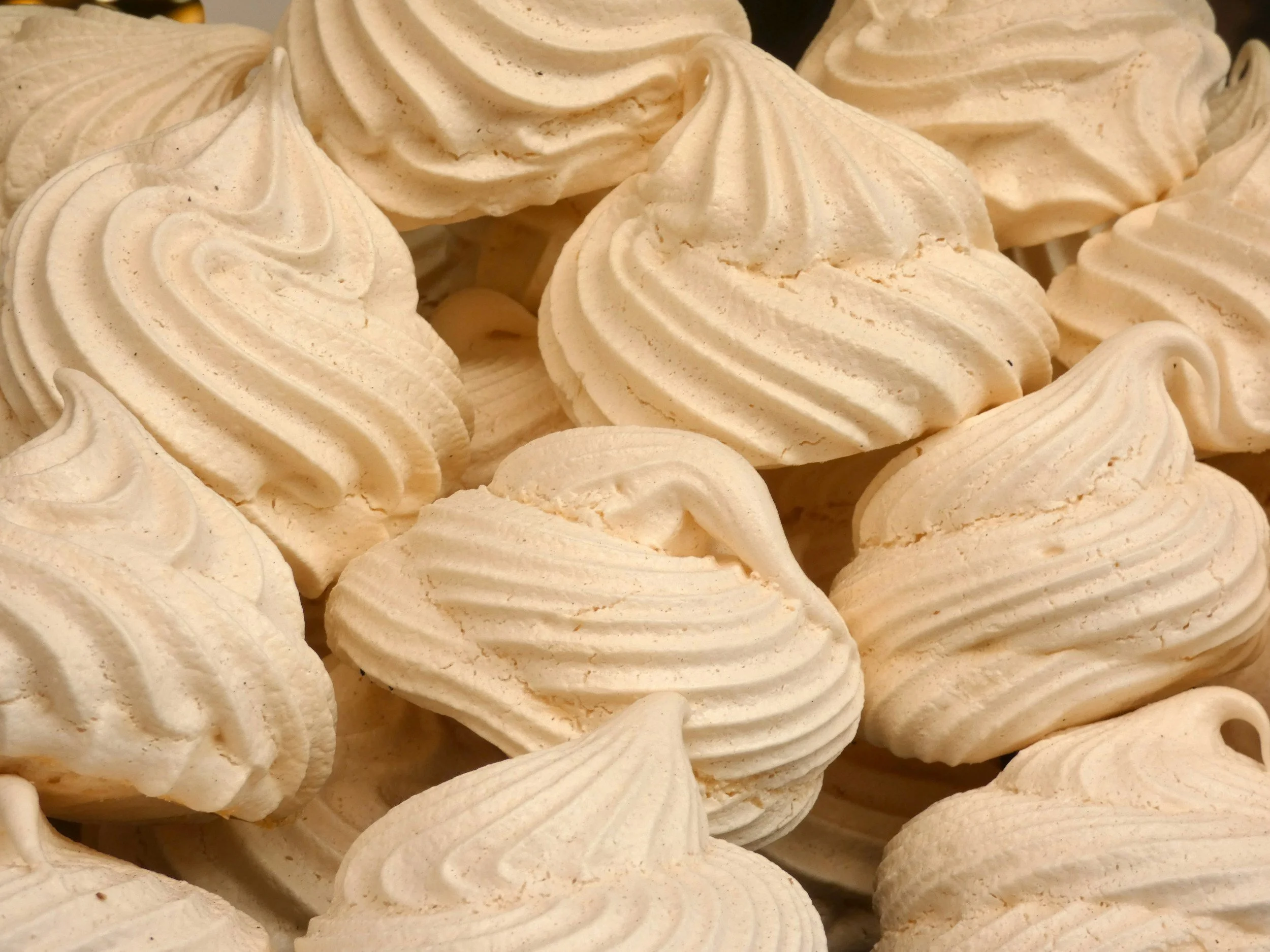
If you've ever wondered how to make meringues at home, you're in the right place. These delicate, airy little bites look like they belong in a patisserie window — but they're surprisingly simple to pull off in your own kitchen. All you need is a mixer, four everyday ingredients, and a little patience while they bake low and slow.
As an Amazon Associate I earn from qualifying purchases.
Prep: 10 minutes |Bake: 40 min | Yield: ~30 bites |Category: Dessert
📖 Jump to Recipe | 💬 Jump to FAQs| 🖨️ Print Recipe
Only 4 ingredients stand between you and a tray of cloud-like, melt-in-your-mouth meringue bites. No candy thermometer, no fuss — just one bowl and a mixer.
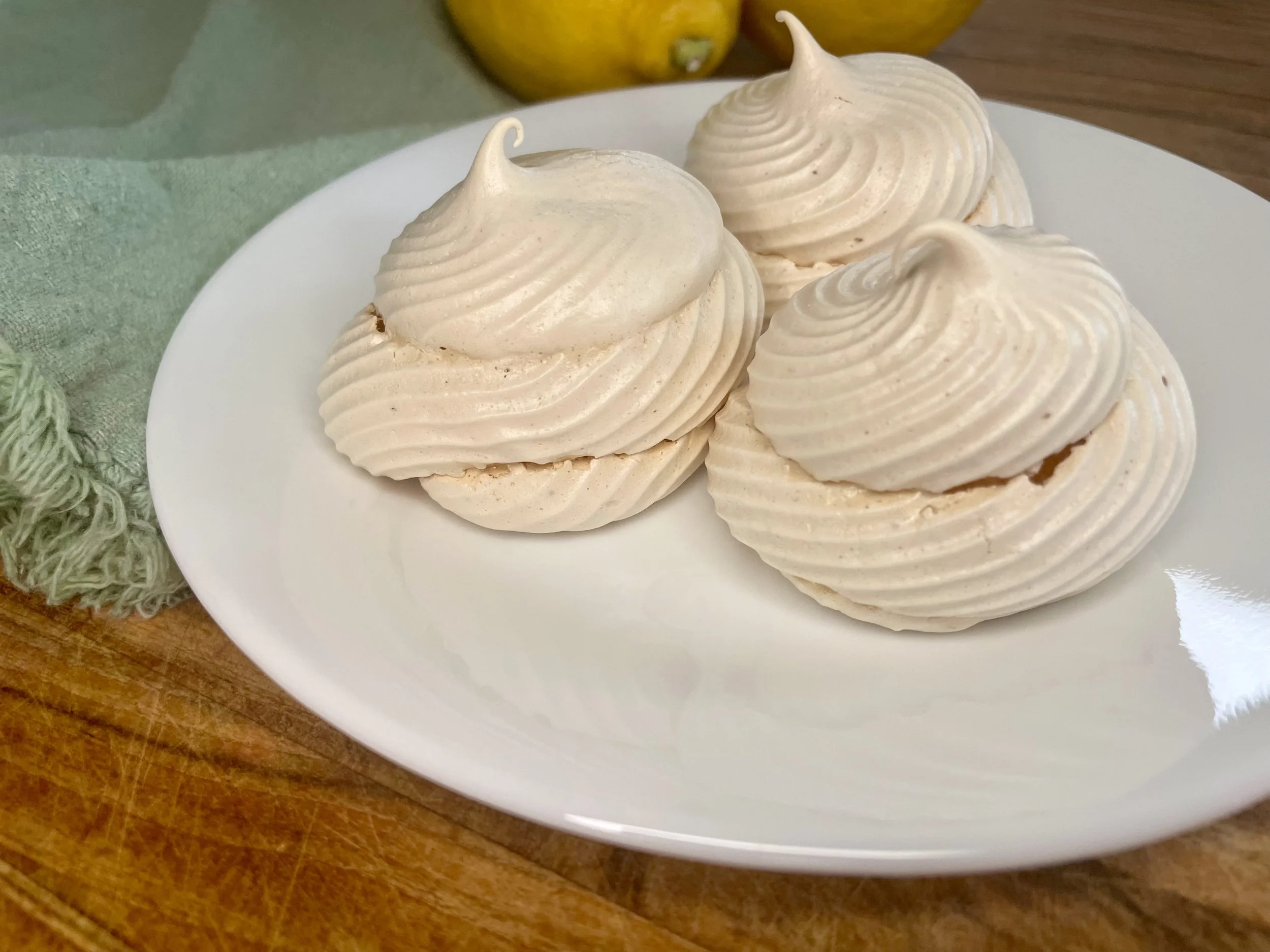
If you've ever wondered how to make meringues at home, you're in the right place! These delicate, airy little bites look like they belong in a patisserie window — but they're surprisingly simple to pull off in your own kitchen. All you need is a mixer (either a stand mixer (affiliate link) or a hand mixer (affiliate link) will do the trick), four everyday ingredients, and a little patience while they bake low and slow.
I started making meringues when my husband and I were on a trip. We stopped at this cute little café and each bought a meringue on a whim. This was the first time I ever had a meringue and from that first bite, I knew that I just had to learn how to make them! If you’ve never had one, I can best describe it as taking a bite out of the most delicate and sweet little cloud that’s perfectly crispy and sweet.
Now, how to make them?! Meringues are the kind of recipe that feels magical every time: you start with a bowlful of liquid egg whites (no yolks), and roughly 8 minutes later you have a stiff, glossy cloud of sweetness. Piped into bite-sized swirls and baked until crisp, they shatter gently on the bite and dissolve on the tongue.
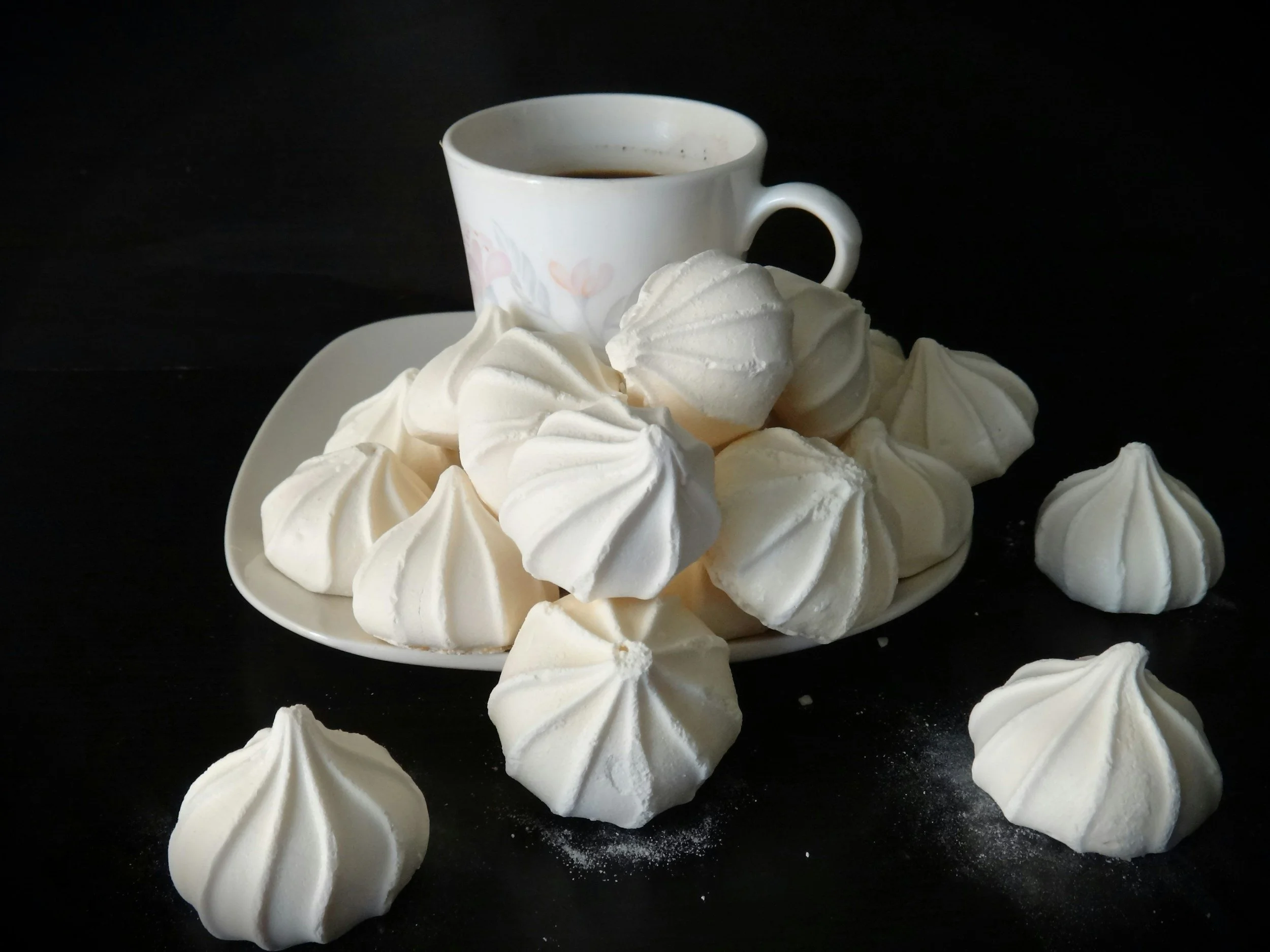
What Are Meringues?
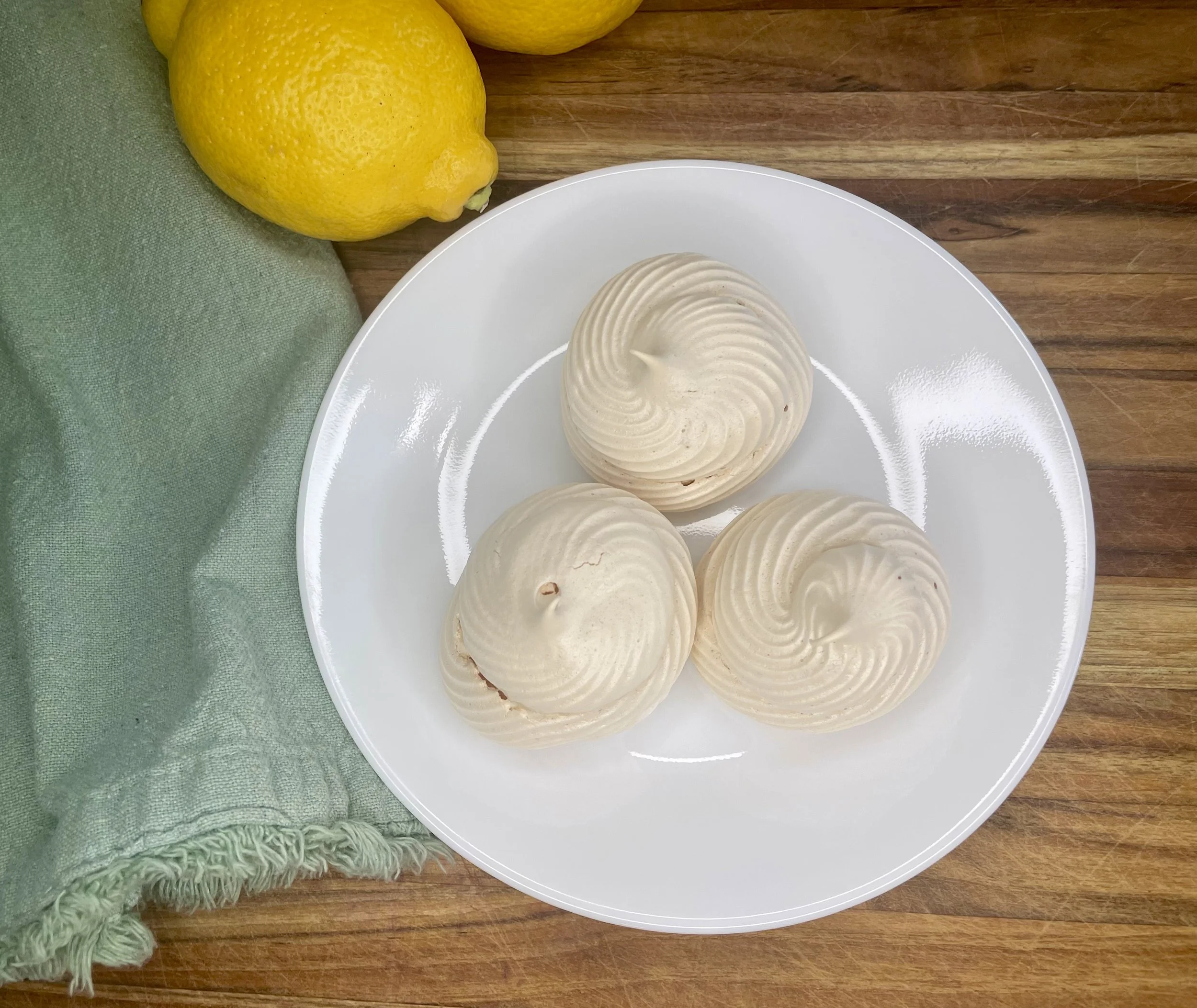
Meringues are a classic French confection made by whipping egg whites with sugar until they form stiff, glossy peaks, then baking them at a very low temperature until they are dry and crisp all the way through. The result is light as air, with a papery shell and a slightly chewy, cotton-candy-like center.
They're naturally fat-free, gluten-free, and endlessly versatile — served on their own, sandwiched with lemon curd, crumbled over ice cream, or used to top pies and pavlovas.
Pro tip: if you slightly underbake them by about 5 minutes, they’ll be crispy on the outside, and marshmallowy texture on the inside. ;)
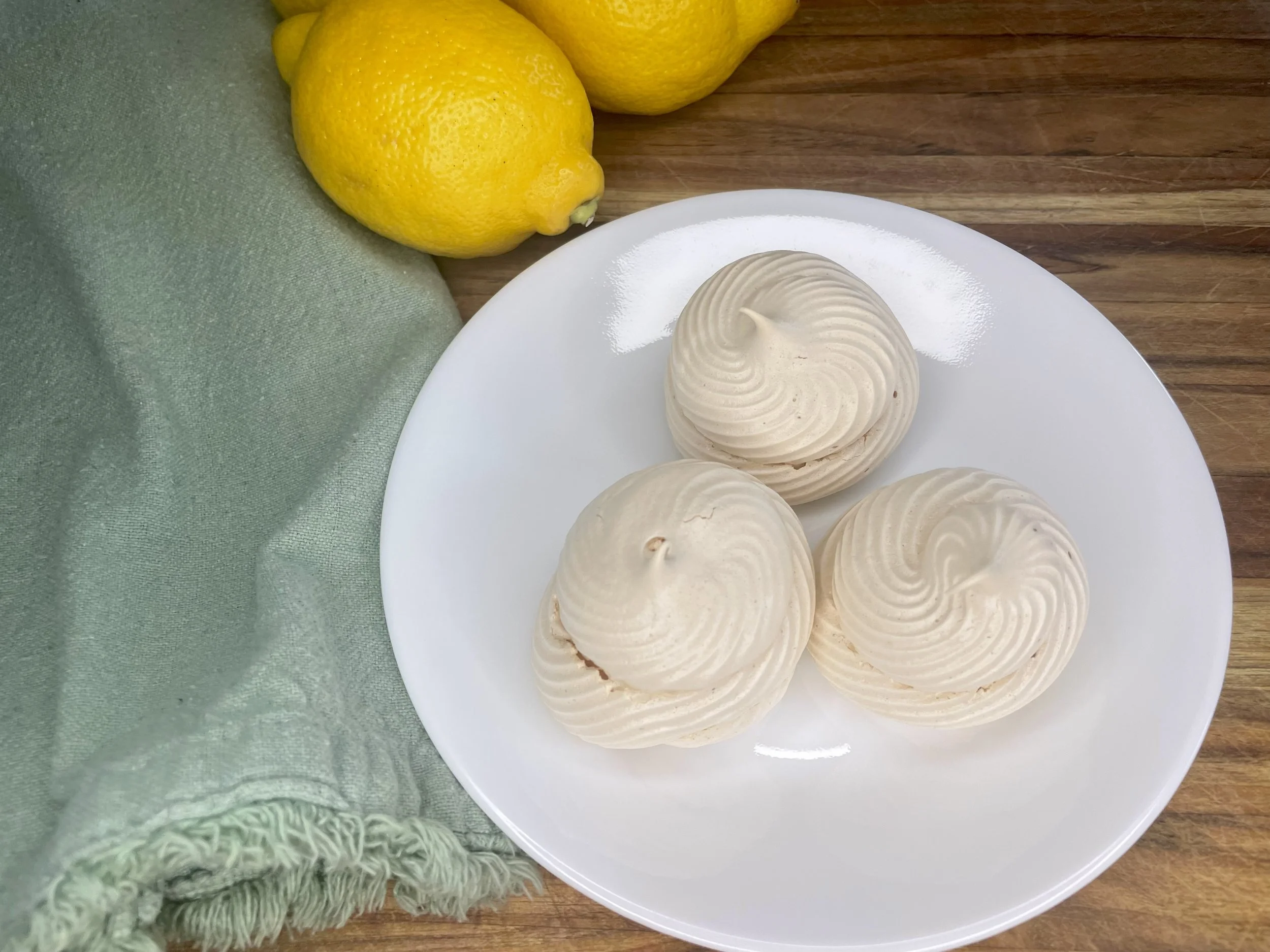
Ingredients You'll Need
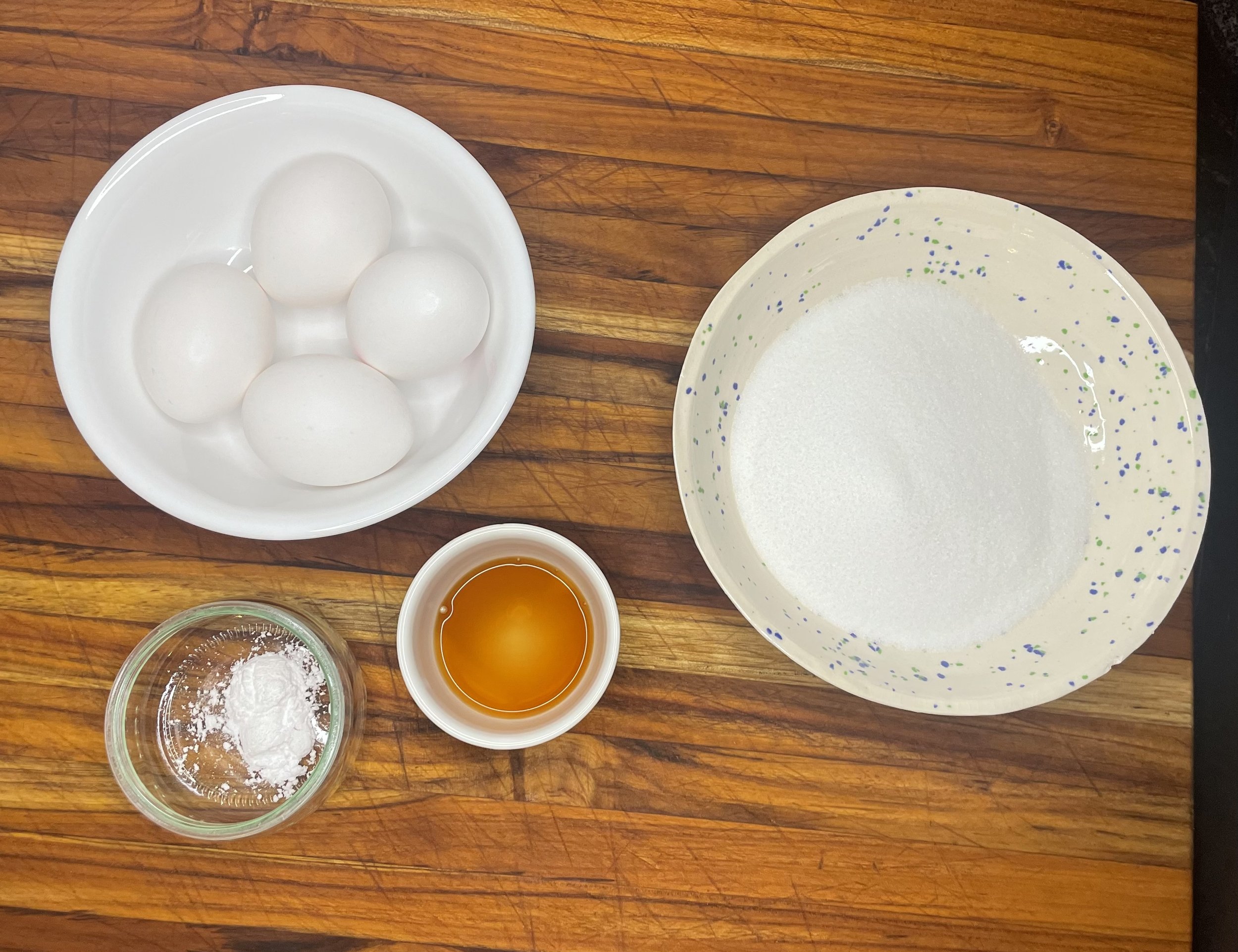
One of the best things about this recipe is how short the ingredient list is. Here's what goes into perfect homemade meringues:
4 large egg whites — room temperature egg whites whip to a greater volume. Separate your eggs while cold, then let the whites sit out for 20–30 minutes before starting.
1 cup (200g) granulated sugar — no fancy sugar required, regular white sugar works perfectly.
½ tsp cream of tartar — this stabilizes the egg whites, helping them hold their shape and preventing weeping.
½ tsp vanilla extract — pure vanilla adds a warm, rounded flavour. The vanilla will impact the colour of the meringues, making them more of an ivory colour. If you’re looking for a crisp white meringue, skip the vanilla altogether, but if you’d rather have that blissful vanilla flavour, add it in.
Optional: You can swap in almond extract or a scrape of vanilla bean paste for a fancier finish.
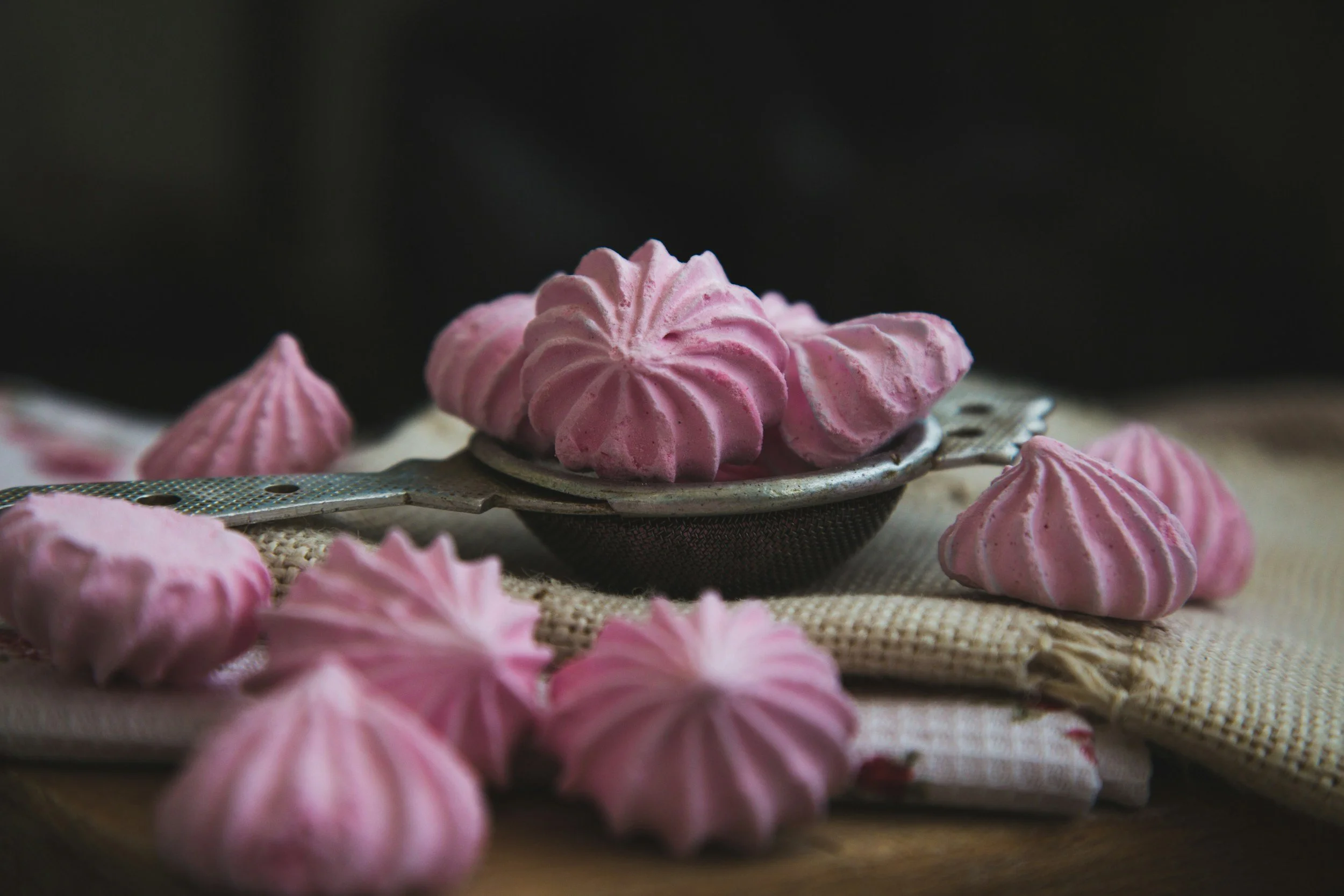
Optional: adding 4-6 drops of your favourite food colouring will change the colour of the meringues. My kids really like it when I add a few drops of red dye, making the meringues a soft pink colour.
Recipe Card
Equipment You'll Need
Mixer: either a standmixer (affiliate link). If you don’t own one, a hand mixer (affiliate link) and a large mixing bowl (affiliate link) will work for this recipe. Be sure to use the whisk attachment.
2 large baking sheets (affiliate link)
Parchment paper (affiliate link)
Piping bag with a star or round tip
Ingredients
4 large egg whites, room temperature
1 cup (200g) granulated sugar
½ tsp cream of tartar
½ tsp pure vanilla extract
Step by Step Instructions
MAKE SURE YOUR EQUIPMENT IS EXTRA CLEAN
Even a trace of fat will prevent the egg whites from whipping properly. This is not the time to rinse and re-use the same mixing bowl that you just used when batch baking.
PREHEAT THE OVEN WELL IN ADVANCE
I cannot stress this enough. Having a well pre-heated oven can make or break this recipe. Set your oven to 275°F. A low temperature is the key to drying out the meringues slowly without browning them, and to prevent undercooking.
PREP YOUR BAKING SHEETS
Line 2 large baking sheets with parchment paper (affiliate link). Do not grease the parchment — the meringues need a slightly grippy surface to hold their shape as they bake.
COMBINE ALL INGREDIENTS & WHIP
Add all of the ingredient except for the sugar, to the bowl of your mixer. That would be the egg whites (be sure that no egg yolks make their way in), cream of tartar, and vanilla extract (I like using pure vanilla extract) to the bowl of your mixer, making sure to use the whisk attachment. Start on low speed and gradually increase to full speed. Once the mixer is on full speed, add the sugar ¼ cup at a time. Whip on full speed for 6–8 minutes, until the meringue is thick, glossy, and holds stiff peaks when you stop the machine and lift the whisk. You need all three to meet the criteria to stop. If it’s thick and glossy, but its not holding its peaks, then it needs o whip up a little longer. Keep the machine going on full speed.
PIPE THE MERINGUES
Transfer the meringue to a piping bag fitted with your choice of tip, I recommend the star or round tip. Holding the bag perpendicular to the baking sheet, pipe bite-sized swirling mounds — about the size of a large walnut — spacing them roughly 1 inch apart.
BAKE LOW & SLOW
Bake at 275°F for roughly 45 minutes, until the meringues feel dry and lift cleanly off the parchment. Turn the oven off, prop the door open slightly, and let the meringues cool inside the oven for at least 1 hour. This slow cooling step prevents cracking.
Pro Tips for Perfect Meringues
Make sure your bowl and whisk are completely grease-free. Even a trace of fat will prevent the egg whites from whipping properly.
Wipe them with a paper towel dipped in white vinegar before starting.
Separate your eggs while they're cold (fat from the yolk breaks away cleanly), but whip at room temperature for maximum volume.
On humid days, meringues can turn sticky. Bake on the driest day you can, and store them in a paper bag.
Don't open the oven door during baking — sudden temperature changes cause cracks.
For flavoured meringues
fold in a pinch of espresso powder, matcha, or a few drops of food coloring at the very end of whipping. My kids love adding a few drops of food colouring to these meringues. Start by adding 4-5 drops at the end of the whipping to get a pastel colour and add more if you’d like a more vibrant colour.
other recipes I think you’ll love
How to Store Meringues
Once completely cooled, store meringues in an airtight container at room temperature for up to 2 weeks. Keep them away from moisture — do not refrigerate, as the humidity will make them sticky and soft. They can also be frozen in a zip-lock bag for up to 1 month; thaw at room temperature for 30 minutes before serving.
Ways to Serve Meringues
Meringue bites are delicious on their own, but here are a few ways to take them further. Here are a few ideas:
Sandwich cookies: Pipe a little whipped cream or buttercream between two meringues.
Dessert board: Pile them high alongside fresh berries, chocolate truffles, and macarons.
Eton Mess: Crush a handful into a bowl of whipped cream and strawberries for a quick, stunning dessert.
Ice cream topping: Crumble over a scoop of vanilla or lemon gelato.
Party favors: Package 6–8 bites in a small cellophane bag tied with ribbon.
Frequently Asked Questions
How do you make meringues step by step?
To make meringues, preheat your oven to 275°F and line two baking sheets with parchment paper. Add 4 egg whites, 1 cup of sugar, ½ tsp cream of tartar, and ½ tsp vanilla to a stand mixer bowl. Start on low speed and increase to full speed, whipping for 6–8 minutes until stiff, glossy peaks form. Pipe bite-sized swirls onto the baking sheets and bake for 1 to 1.5 hours until crisp. Turn off the oven and let them cool inside with the door slightly open.
What temperature do you bake meringues at?
Meringues are baked at a low temperature — 275°F. Low heat dries the meringues out slowly without browning or burning them, which is the secret to a crisp, white result.
Why is cream of tartar used in meringues?
Cream of tartar stabilizes the egg white foam, helping meringues hold their shape and preventing them from "weeping" (releasing liquid). It also gives the meringue a brighter white color and a slightly fluffier texture.
How long do homemade meringues last?
Homemade meringues last up to 2 weeks when stored in an airtight container at room temperature. Keep them away from moisture and do not refrigerate them, as humidity will make them sticky and soft.
Why are my meringues chewy instead of crispy?
Chewy meringues are usually caused by underbaking, high humidity, or not letting them cool in the oven. Make sure you bake them for the full time, cool them inside the turned-off oven, and bake on a dry day if possible.
Can I make meringues without a stand mixer?
Yes! You can make meringues with a handheld electric mixer (affiliate link). It may take 10–12 minutes instead of 6–8 to reach stiff peaks. Whipping by hand with a balloon whisk is possible but very tiring and less reliable.
I followed all of the steps, but my meringues are an ivory colour. Why did this happed?
This recipe calls for ½ tsp vanilla extract that has an ivory colour to it, instead of being a crisp white. If adding in the vanilla extract, the meringues will have the loveliest hint of vanilla, but adding it will cause the meringue to be more of an ivory colour. You can omit the vanilla if you’d rather have a crisp white meringue, instead of the hint of vanilla flavour.
Final Thoughts
This easy meringue recipe will earn you the most compliments with the least amount of effort. Delicate, sweet airy bites will satisfy the pickiest of eaters — all from a single bowl.
If you make this recipe, I'd love to hear from you! Leave a comment, rate the recipe, and share a photo. Don't forget to pin this for your next baking day! ❤️
DID YOU MAKE THIS RECIPE? I WANT TO SEE IT!
We'd love to hear from you! Please leave a ⭐ star rating and comment below to let us know how your muffins turned out. Did you make any substitutions or additions? Share your tips and photos!
Share this recipe: Help others discover this delicious recipe by sharing it on Pinterest, Facebook, or Instagram. Tag us @Sageandsimplicity so we can see your beautiful creations!
📌 Pin it for later: Save this recipe to your Pinterest boards for easy access.
Recipes We Think You’ll Love!
The Best Homemade Lemon Curd
5 ingredients. One saucepan. Twenty minutes. The brightest, silkiest lemon curd you'll ever taste — and shockingly easy to make from scratch.
Published: 14 May 2026 | Category: Dessert | Prep Time: 5 minutes | Cooking Time: 20 minutes | Total Time: 25 minutes
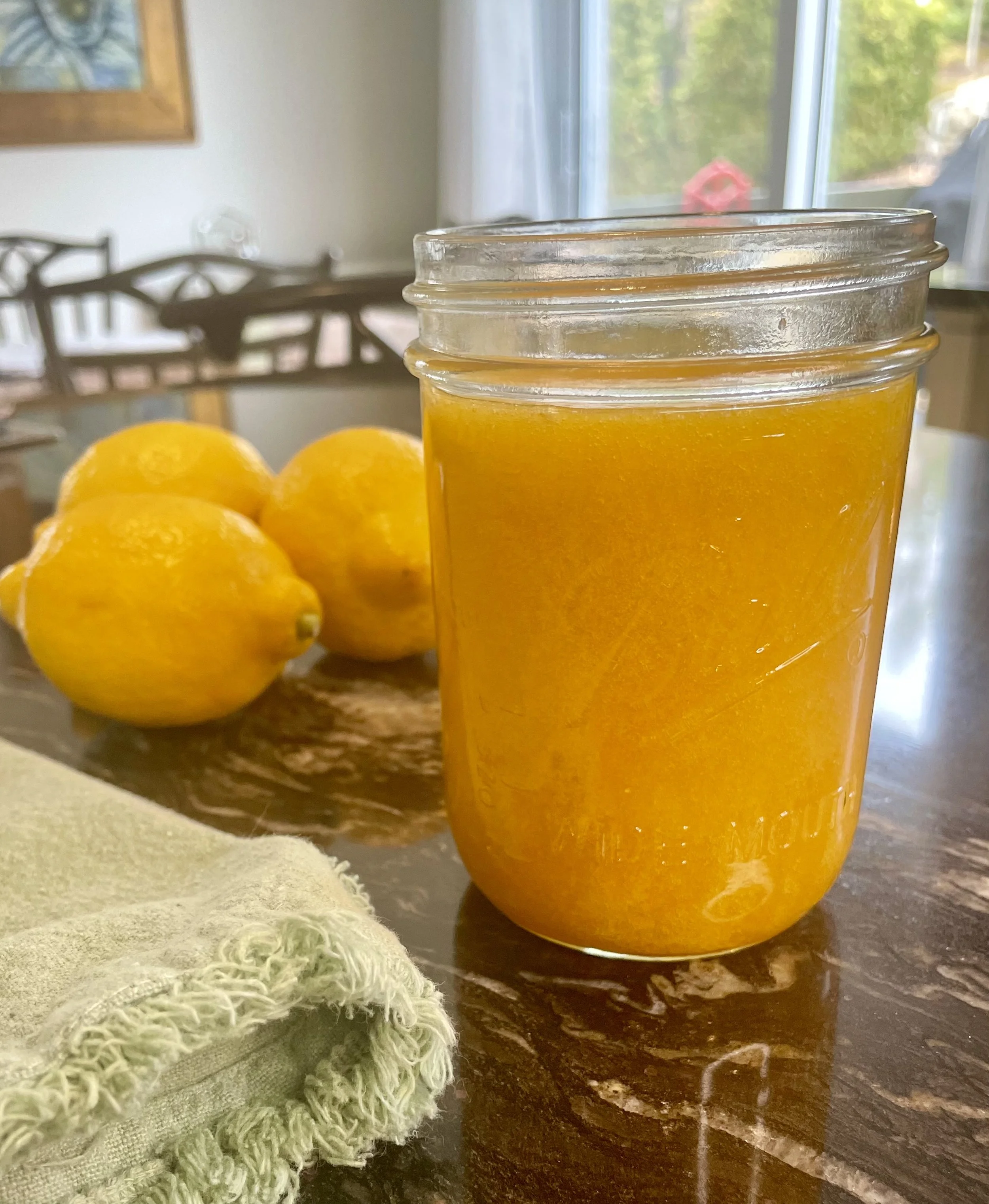
If you've never made lemon curd from scratch, prepare to be converted. This is not a "weekend project" recipe — it takes one saucepan, 20 minutes of gentle stirring, and five ingredients that are readily available at the store. The result? A glossy, sunshine-yellow spread that is so alive with citrus flavour it makes anything it touches taste ten times better.
I've tried double-boiler methods, constant-stirring methods, blender hacks. This stovetop approach is silky, most approachable, and optimized for less dishes that I’ve created. The key is cold butter added at the end — it emulsifies the curd into that signature creamy, pourable consistency.
Once you have a jar in the fridge, you'll find yourself reaching for it constantly: spooned onto scones at breakfast, swirled into yogurt, layered into cakes, or honestly just eaten off a spoon over the kitchen sink. No judgment. ;)
Ingredients
Makes approximately 1½ cups (enough to fill one standard jam jar)
4 egg yolks, room temperature
1 cup granulated sugar
⅔ cup fresh lemon juice — about 3–4 lemons (160ml)
zest from 1 lemon, use the same lemon that you're juicing
½ cup cold unsalted butter, cut into 1cm cubes (115g)
A note on ingredients
Egg yolks, not whole eggs. Yolks give a richer, more golden curd with a creamier mouthfeel.
Fresh lemon juice preferred. I’ve made this lemon curd with both bottled lemon juice and fresh lemon juice, and both work. Some people will say that bottled lemon juice lacks the volatile oils that make lemon curd sing, and to squeeze your own. Im here to say use what you have on hand because both work for this recipe.
Cold, unsalted butter, is essential. Adding cold butter at the end, not during cooking, is what creates that silky emulsified texture. Don't skip this step.
Instructions
Combine everything except the butter
Add the egg yolks, sugar, lemon juice, and lemon zest to a medium saucepan. Whisk together until the sugar begins to dissolve and everything looks uniform. Don't worry about it being perfect — it'll come together on the heat.
Cook over medium heat, stirring every few minutes
Place the pan over medium heat. You don't need to stir constantly — every 2 to 3 minutes is fine. You're looking for the mixture to gradually thicken and turn from a pale yellow liquid into a proper custard-like consistency. This takes about 20 minutes. The curd is ready when it coats the back of a spoon and a line drawn through it holds its shape.
Add the cold butter and stir well
Take the pan off the heat. Add all the cold butter cubes at once and stir continuously until every cube is melted and fully incorporated. The curd will turn glossy and noticeably silkier. This is the moment it goes from "good" to "extraordinary."
Jar, cool, and refrigerate
Pour the warm curd into a clean jar (a heatproof glass jar works perfectly - I like using mason jars). Let it cool at room temperature — it will thicken further as it cools — then seal and refrigerate. It keeps for up to 2 weeks in the fridge.

What to do with lemon curd
Honestly, the list is long. Here are the ways I use it most often:
Spread
Lemony Muffins filling
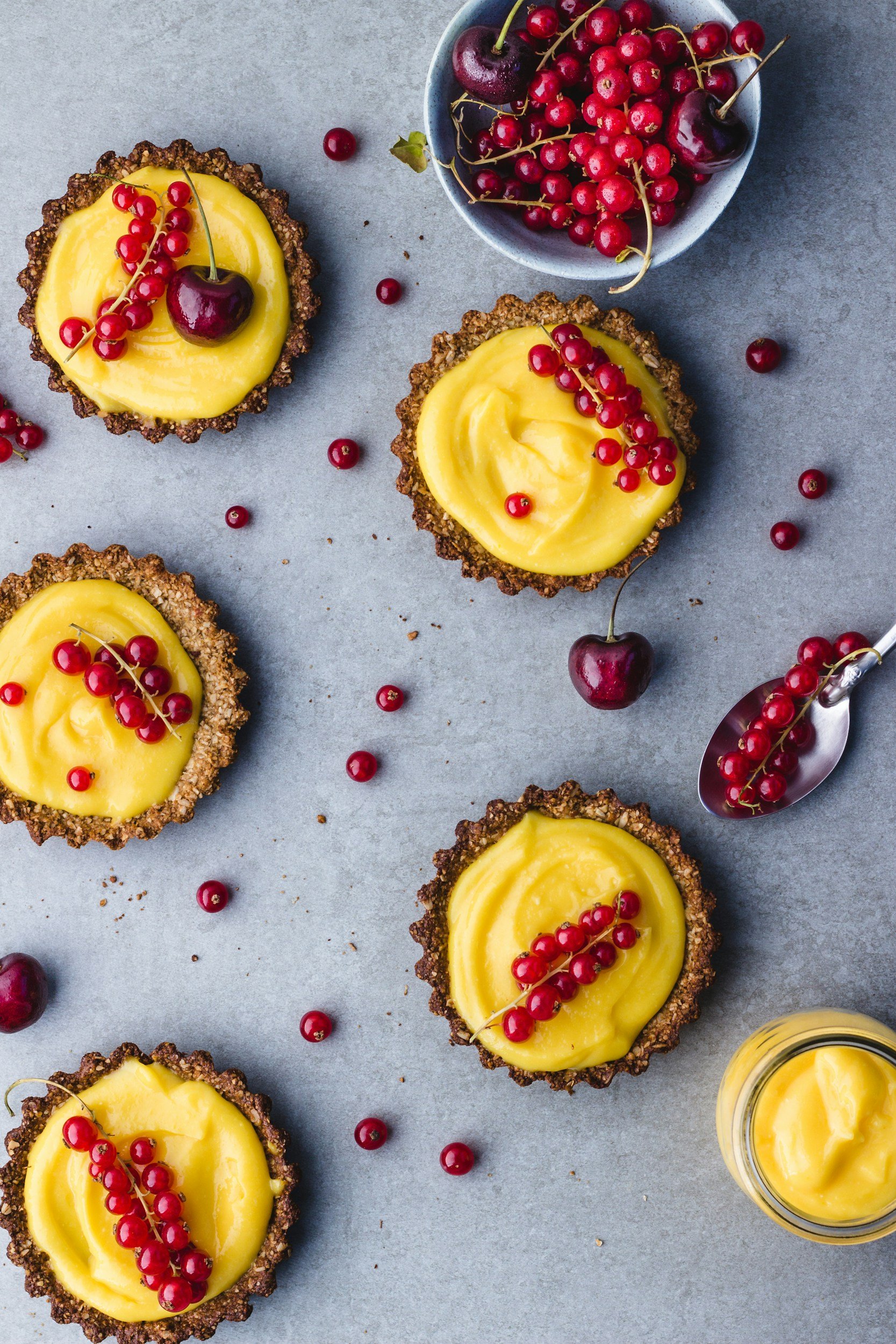
Lemon Tart filling
Swirled into yogurt
Pavlova topping
Thumbprint cookies
Drizzled on pancakes
Stirred into whipped cream
Swirled into a Cheesecake
It also makes a genuinely impressive homemade gift — a small jar wrapped with ribbon is the kind of thing people remember.
Tips for perfect lemon curd every time
Don't rush the heat. Medium is the right temperature. High heat risks scrambling the yolks and you'll end up with lemony scrambled eggs. Patience pays off here.
It will look too thin while it's cooking. Trust the process. The curd sets as it cools, so remove it from the heat when it coats the back of a spoon — not when it's already thick.
Strain for extra smoothness. If you want an ultra-silky curd with no zest bits, pour it through a fine-mesh sieve just before adding the butter. Totally optional but nice for tarts.
Want it tarter? Reduce the sugar to ¾ cup. Want it sweeter? Add an extra 2 tablespoons. The recipe is very forgiving.
Storage & freezing
Lemon curd keeps in a sealed jar in the refrigerator for up to 2 weeks. It also freezes beautifully — pour into a freezer-safe container and freeze for up to 3 months. Thaw overnight in the fridge before using. Give it a good stir once thawed to bring it back together.
Frequently asked questions
How long does homemade lemon curd last?
Stored in a sealed jar in the refrigerator, homemade lemon curd lasts up to 2 weeks. In the freezer, it keeps for up to 3 months.
Can I use whole eggs instead of just yolks?
Yes, though the texture and colour will differ. Yolks produce a richer, creamier, more golden curd. Whole eggs give a slightly lighter result. If substituting, use 2 whole eggs in place of the 4 yolks.
Why is my lemon curd not thickening?
Lemon curd continues to thicken significantly as it cools — it may look too thin in the pan and be perfect once chilled. If it's still very runny after refrigerating for a few hours, it was likely undercooked. It should coat the back of a spoon before you remove it from the heat.
Can I make lemon curd without a double boiler?
Absolutely — this entire recipe uses a regular saucepan directly on the stovetop over medium heat. No double boiler required. Just keep the heat at medium (not high) and stir regularly.
What can I use lemon curd for?
Lemon curd is incredible spread on scones, toast, muffins, and crumpets. It's a classic filling for tarts and layer cakes, a topping for pavlova and cheesecakes, a swirl-in for yogurt and whipped cream, and a beautiful filling for thumbprint cookies.
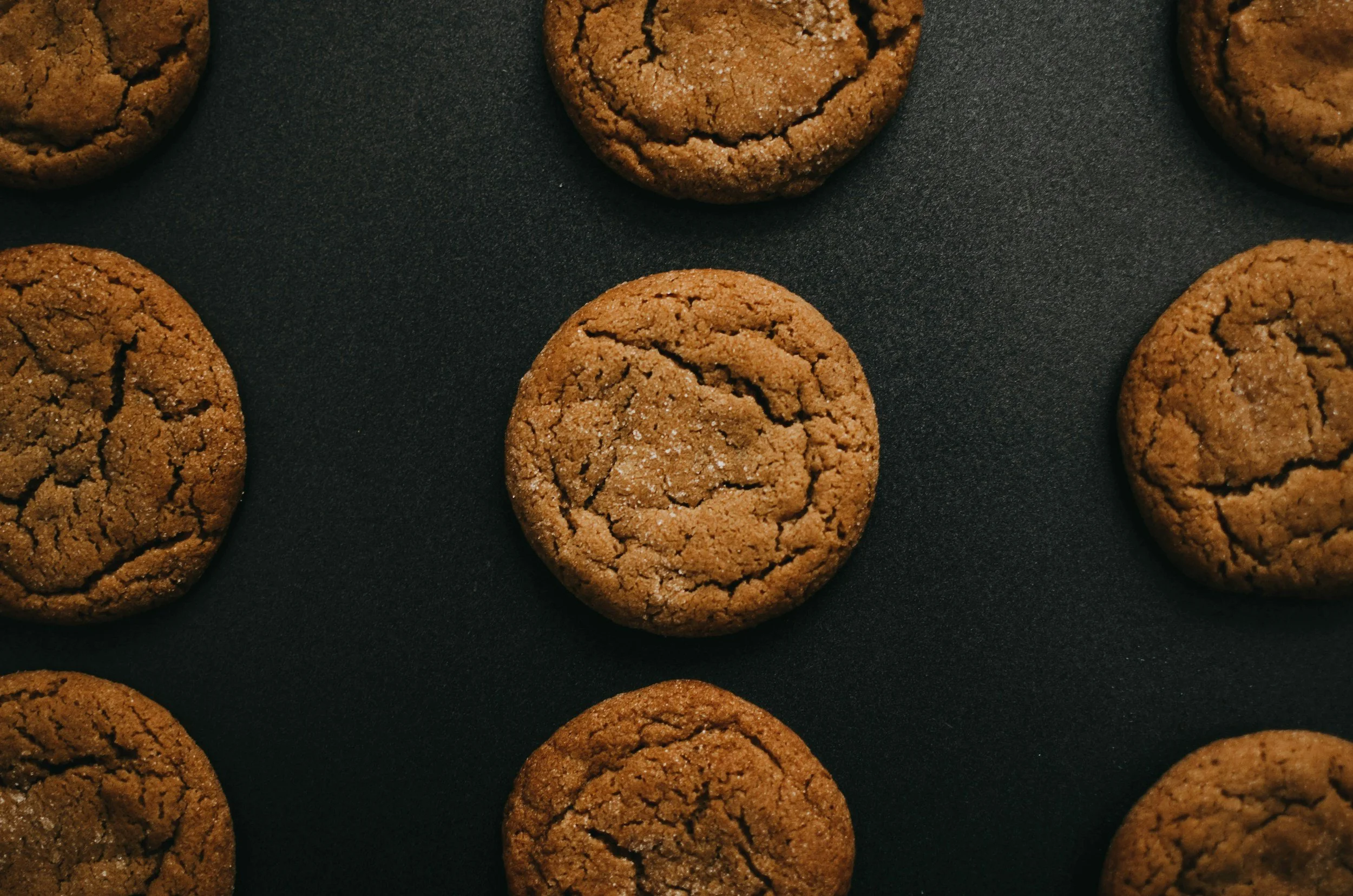
Easy Soft Gingerbread Cookies (with Fresh Ginger!)
These soft gingerbread cookies are made with ¾ cup of fresh ginger root — not powdered spice. The secret? A garlic press extracts all the flavorful juice without the fibrous texture. The dough rests for 24-72 hours, allowing the fresh ginger to infuse and the molasses flavor to deepen. The result is a chewy cookie with complex, warming spice that tastes nothing like store-bought. My kids request these several times a year, especially during fall and winter. With just 7 simple ingredients and a make-ahead method, these are the easiest holiday cookies you'll ever make.
As an Amazon Associate I earn from qualifying purchases.
⭐⭐⭐⭐⭐ (4.9/5 based on reader reviews)
📖 Jump to Recipe | 💬 Jump to FAQs | 🖨️ Print Recipe
Prep Time: 20 minutes | Chill Time: 24-72 hours | Total Time: 24+ hours | Yield: 20 cookies | Serving Size: 1 cookie | Difficulty: Easy
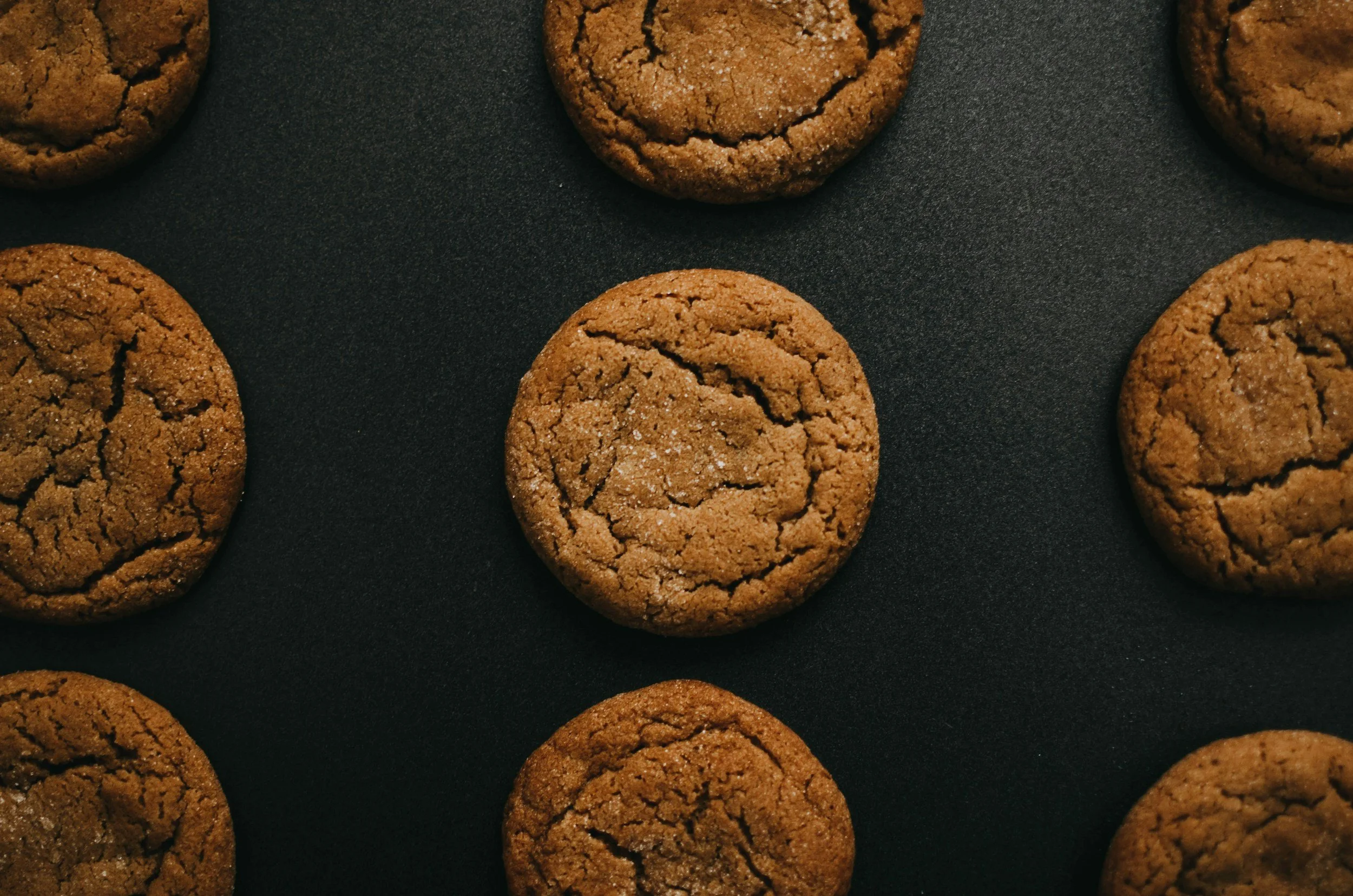
Easy Soft Gingerbread Cookies
Introduction
Once you taste cookies made with real ginger, there's no going back to powdered spices. These soft gingerbread cookies get their incredible flavour from fresh ginger root—¾ cup of it— pressed directly into the dough for intense, warming spice that can't be replicated with anything from a jar.
The secret to these cookies? Patience. Let that dough rest for at least 24 hours in the fridge. This slow cold fermentation deepens the molasses flavour and allows the fresh ginger to fully infuse the dough. The result is a cookie with complex, layered flavour that tastes like you spent hours in the kitchen—even though the actual hands-on time is minimal.
These are soft, chewy galettes that spread naturally as they bake, creating cookies with tender centers and slightly crisp edges. They're nothing like traditional gingerbread men (they’re far too soft for cookie cutters), but that's exactly what makes them special. These are the gingerbread cookies you want with your morning coffee or afternoon tea.
My kids—and their friends—ask me to make these several times a year, especially in the fall and winter when that warm ginger spice feels just right. They've also become a staple during the holidays in our house, filling the kitchen with the most incredible aroma as they bake.
Why You'll Love This Recipe
Fresh Ginger Makes All the Difference: Real ginger root delivers bright, zesty flavour that ground ginger simply can't match. The garlic press method extracts all the spicy juice without the fibrous texture.
Make-Ahead Friendly: Mix the dough today, bake anytime in the next three days. Perfect for holiday prep or when you want fresh-baked cookies without day-of stress.
Simple Ingredient List: Just seven real ingredients you probably have in your pantry. No specialty items required.
Minimal Cleanup: The garlic press trick means no grater to wash, no ginger bits all over your cutting board.
Kid-Approved: These have been tested and loved by multiple rounds of kids and their friends. That's the real stamp of approval.
Equipment Needed
Mixing bowl (affiliate link)
Electric mixer or stand mixer with paddle attachment (optional, can mix by hand)
Garlic press (essential for this recipe)
Measuring cups and spoons
Sifter or fine-mesh strainer
Parchment paper
Plastic wrap or airtight container
Sharp knife
Baking sheet (affiliate link)
Wire cooling rack (affiliate link)
Ingredients
½ cup salted butter, softened
¼ cup brown sugar, packed
1 large egg
¾ cup fresh ginger, peeled and cubed (about 4-5 inches of ginger root)
¾ cup molasses (not blackstrap)
1 tsp baking soda
2 cups all-purpose flour, sifted
Instructions
Step 1: In a mixing bowl, cream together the softened butter and brown sugar until light and fluffy, about 2 minutes. Add the egg and mix until fully combined.
Step 2: Using a garlic press, press the ginger cubes, one at a time, directly into the butter mixture, squeezing out all the juice and pulp. Small ginger pieces will fall into the dough—this is fine and adds texture. Continue until all ginger has been pressed. Discard the leftover ginger fibres once pressed.
Step 3: Add the molasses and baking soda. Mix until everything is fully incorporated and the mixture is smooth and glossy.
Step 4: Add the sifted flour and gently fold in with a spatula or wooden spoon until just combined. The dough will be soft and slightly sticky. Don't overmix or the cookies will be tough.
Step 5: Transfer the dough onto a large sheet of parchment paper. Shape it into a log about 2-3 inches in diameter. Wrap tightly in the parchment, then wrap again in plastic wrap or place in a sealed container. Refrigerate for 24-72 hours.
Step 6: When ready to bake, preheat your oven to 350°F (175°C). Line a baking sheet with parchment paper.
Step 7: Remove the dough log from the fridge. While the dough is still cold and firm, use a sharp knife to slice into 1-inch thick rounds. Work quickly—the dough becomes sticky as it warms up. If it starts getting soft, return to the fridge for 15 minutes.
Step 8: Place cookie rounds on the prepared baking sheet, spacing them about 2 inches apart. They will spread during baking.
Step 9: Bake for 10-12 minutes. The cookies will look slightly underdone in the center with set edges—this is what you want. They will continue to cook as they cool.
Step 10: Let the cookies cool on the baking sheet for 5 minutes to set, then carefully transfer to a wire rack to cool completely. They'll be very soft when warm but will firm up as they cool.
Recipe Notes & Tips
About the Fresh Ginger: Don't skip this or substitute ground ginger. The fresh ginger is what makes these cookies special. Look for ginger root that has smooth, tight skin and no wrinkles. Young ginger is less fibrous and easier to press.
The Garlic Press Method: This is a game-changer for working with fresh ginger. It extracts all the flavourful juice and leaves behind the tough fibers. If you don't have a garlic press, finely grate the ginger and squeeze it through cheesecloth to extract the juice.
Why the Long Chill? The 24-72 hour rest isn't just about easier slicing. The flavours meld and deepen during this time. The molasses becomes less sharp, the ginger infuses throughout, and the cookies develop a more complex taste. Cookies baked after 24 hours taste good. Cookies baked after 48-72 hours taste incredible.
Slice While Cold: This is critical. If the dough warms up, it becomes very sticky and difficult to slice cleanly. The butter softens and the dough will stick to your knife and hands. If it starts getting soft, pop it back in the fridge for 15 minutes.
Don't Overbake: These cookies will look slightly underdone when you pull them from the oven. That's correct. They firm up as they cool. Overbaking will give you dry, hard cookies instead of the soft, chewy texture you want. The edges should be set and slightly darker, but centers should still look soft.
Do Not Use Cookie Cutters: These are galettes (rustic, free-form cookies), not structural gingerbread. The high butter content makes them too soft to roll and cut into shapes. They spread naturally as they bake. Embrace the simple, rustic look.
Butter Temperature Matters: Softened butter should be room temperature—it should leave a slight indent when pressed but not be greasy or melted. If your butter is too soft, the cookies will spread too much.
Storage & Freezing
Refrigerator: Store cooled cookies in an airtight container in the fridge for up to 5 days. They actually get better on day 2-3 as the flavours continue to develop. Place parchment paper between layers if stacking.
Freezing Baked Cookies: Freeze baked cookies in a freezer-safe container or zip-top bag for up to 3 months. Layer with parchment paper to prevent sticking. Thaw at room temperature for 30 minutes before serving.
Freezing Unbaked Dough: You can freeze the unbaked dough log (wrapped tightly in plastic wrap and then aluminum foil) for up to 3 months. Slice and bake directly from frozen, adding 1-2 minutes to the baking time. No need to thaw.
Variations & Additions
Crystallized Ginger: Fold in ¼ cup of finely chopped crystallized ginger after adding the flour for extra ginger punch and chewy texture.
Maple Ginger Cookies: Replace half the molasses with pure maple syrup for a lighter, slightly less intense flavour with maple undertones.
Lemon Ginger Cookies: Add 1 tsp of fresh lemon zest with the ginger for bright, citrusy notes that cut through the richness.
Dark Chocolate Ginger: Fold in ½ cup of dark chocolate chips after adding the flour. The bittersweet chocolate pairs beautifully with fresh ginger and molasses.
Ginger Spice Cookies: Add ½ tsp cinnamon and ¼ tsp ground cloves for a more traditional spiced cookie flavour alongside the fresh ginger.
Serving Suggestions
These soft gingerbread cookies pair perfectly with:
Hot coffee or espresso (the bitterness balances the sweetness)
Hot black tea, such as Orange Pekoe or English Breakfast
Chai tea or spiced tea
Cold milk (classic combination)
Vanilla ice cream (make ice cream sandwiches!)
Hot apple cider
Whipped cream or cream cheese frosting for special occasions
Frequently Asked Questions
Can I use ground ginger instead of fresh?
You can, but the flavour won't be the same. Fresh ginger has a bright, zesty, almost citrusy quality that ground ginger lacks. If you must substitute, use 2 tablespoons of ground ginger. The cookies will taste more like traditional gingerbread and less vibrant.
What does fresh ginger taste like in cookies?
Fresh ginger has a warm, spicy flavour with a slight sweetness and bright, peppery notes. It's more complex than ground ginger—less dusty, more alive. The juice extracted from fresh ginger distributes evenly throughout the dough, giving every bite that warming spice.
Why do I need to wait 24-72 hours?
The long chill time allows the fresh ginger to infuse the dough and lets all the flavours develop and meld together. The molasses mellows, the spices bloom, and the texture improves. It also makes the dough much easier to slice. You can technically bake after just a few hours of chilling, but the flavour won't be as deep and complex.
My dough is too sticky to slice. Where did I do wrong?
You didn't do anything wrong—the dough just warmed up. This happens because of the high butter content. Put it back in the fridge for 15-20 minutes and try again. Always slice while the dough is very cold. Work quickly and clean your knife between cuts if needed.
Can I make these into gingerbread men?
No, these cookies are too soft to hold a cut shape. They spread as they bake because of the high butter content, which is what gives them their soft, chewy texture. If you want cut-out gingerbread cookies, you'll need a different recipe with less butter and more flour for structure.
How do I know when they're done baking?
The edges will be set and slightly darker brown, but the centers will still look soft and shiny—almost underdone. They should not be brown all over or firm to the touch. Remember, they continue cooking as they cool on the pan. When in doubt, underbake rather than overbake.
Can I double this recipe?
Absolutely. Make two separate logs and store them in the fridge. You can bake one now and save one for later, or bake both at once using extra baking sheets. The dough freezes beautifully, so feel free to make a double batch.
Do I need to use salted or unsalted butter?
This recipe calls for salted butter, which adds a subtle savoury note that balances the sweetness of the molasses and brown sugar. If you only have unsalted butter, add ¼ tsp of salt to the dough when you add the flour.
Why use a garlic press for ginger?
A garlic press extracts the flavourful juice and soft pulp from fresh ginger while leaving behind the tough, fibrous strings that can be unpleasant in baked goods. It's faster than grating, more efficient than mincing, and means no stringy bits in your cookies. Plus, cleanup is much easier than washing a grater.
My cookies spread too much. What happened?
Make sure your butter is softened but not melted or greasy when you start. Also, the dough must be cold when it goes into the oven. If the dough warmed up while you were slicing, pop the cut cookies in the fridge for 10 minutes before baking. Finally, make sure you're measuring flour correctly (spoon and level, don't pack).
Can I add chocolate chips?
You can fold in ½ cup of dark chocolate chips after adding the flour. Dark chocolate (60-70% cacao) pairs beautifully with fresh ginger and molasses. Milk chocolate will be too sweet.
Are these ginger galettes healthy?
No. These are a treat, not a health food. However, they do contain fresh ginger (which has anti-inflammatory properties) and molasses (which contains iron and calcium). They're made with real ingredients and no artificial flavours or preservatives. Enjoy them in moderation as part of a balanced diet.
What's the difference between gingerbread cookies and molasses cookies?
Molasses cookies typically use ground ginger (if any ginger at all) and focus on the deep, sweet molasses flavour. Gingerbread cookies have a stronger ginger presence and more warming spices. These cookies bridge both—they have robust molasses flavour but the fresh ginger makes them distinctly "gingerbread."
Why are my cookies hard instead of soft?
Most likely, they were overbaked. These cookies should look slightly underdone when you remove them from the oven. They firm up as they cool but should remain soft and chewy. Overbaking by even 2-3 minutes can make them hard. Try reducing baking time by 1-2 minutes next time.
Final Thoughts
These soft gingerbread cookies prove that simple ingredients can create extraordinary flavour. The fresh ginger makes all the difference, and the make-ahead nature means you can enjoy warm cookies without the stress of last-minute baking.
Whether you're baking for your family, holiday gatherings, or just because you're craving that warming ginger spice, this recipe delivers every time. The garlic press trick will change how you use fresh ginger in all your baking.
Did You Make This Recipe? I want to see it!
Leave a ⭐ star rating and comment below to let us know how your ginger galettes turned out. Did you make any substitutions or additions? Share your tips and photos with us!
Share this recipe: Help others discover this delicious recipe by sharing it on Pinterest, Facebook, or Instagram. Tag us @Sageandsimplicity so we can see your beautiful creations!
📌 Pin it for later: Save this recipe to your Pinterest boards for easy access.
This easy lemon meringue pie recipe features a bright, tangy lemon filling topped with soft, fluffy meringue. A foolproof method for a pie that slices beautifully and never weeps.